
Performance
Performance data
Values marked “Measured” come from HyperJet test measurements.
Projectile
| Projectile | Group of 50–100 droplets of a water-based shear-thickening (non-Newtonian) fluid |
|---|---|
| Projectile velocity at the muzzle | ≈ 980 m/s (Mach ~3) |
| Projectile group energy at target, 50 m | 120–130 JMeasured |
| Projectile group energy at target, 120 m | 50 JMeasured |
| Terminal effect | Kinetic, against propellers, motors, optics, batteries and flight controller |
Fire control
| Rate of fire | Up to 30,000 projectile groups per minute |
|---|---|
| Accuracy at 50 m | 2 MOAMeasured |
| Effective engagement range | 50–100 m, with effect to ~120 m |
| Reaction time, detection to impact | 2–3 s |
| Fine aiming | Electronic correction of each projectile group in the nozzle module |
Turret and system
| Turret slew rate | 560°/s, both axesMeasured |
|---|---|
| Pump | 7,000-bar class ultra-high-pressure pump |
| Architecture | Up to 8 turrets per pump station; hot-swap networking between stations |
| Power | Vehicle power, Li-ion battery bank and lightweight APU |
| Sensors | Plenoptic cameras, narrow-beam mmWave radar, multispectral strobe for propeller detection, external cueing |
| GNSS | Not required |
Consumable
| Consumable | Water-based fluid with functional additives |
|---|---|
| Reload | Refill the tank |
Test results
Test results at 50 m
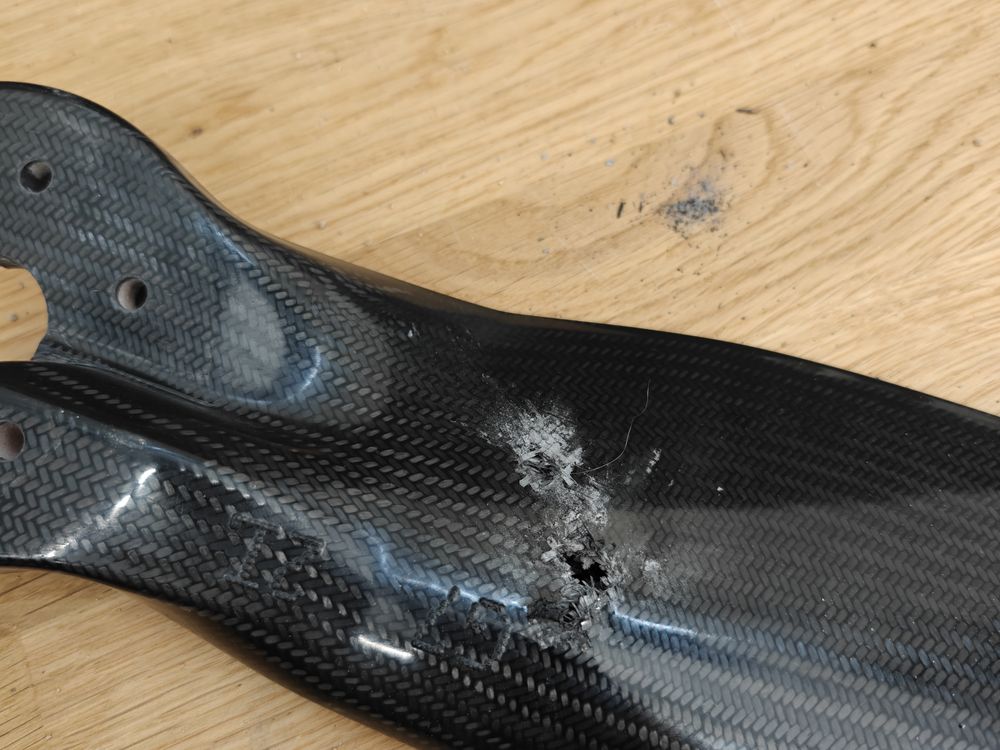
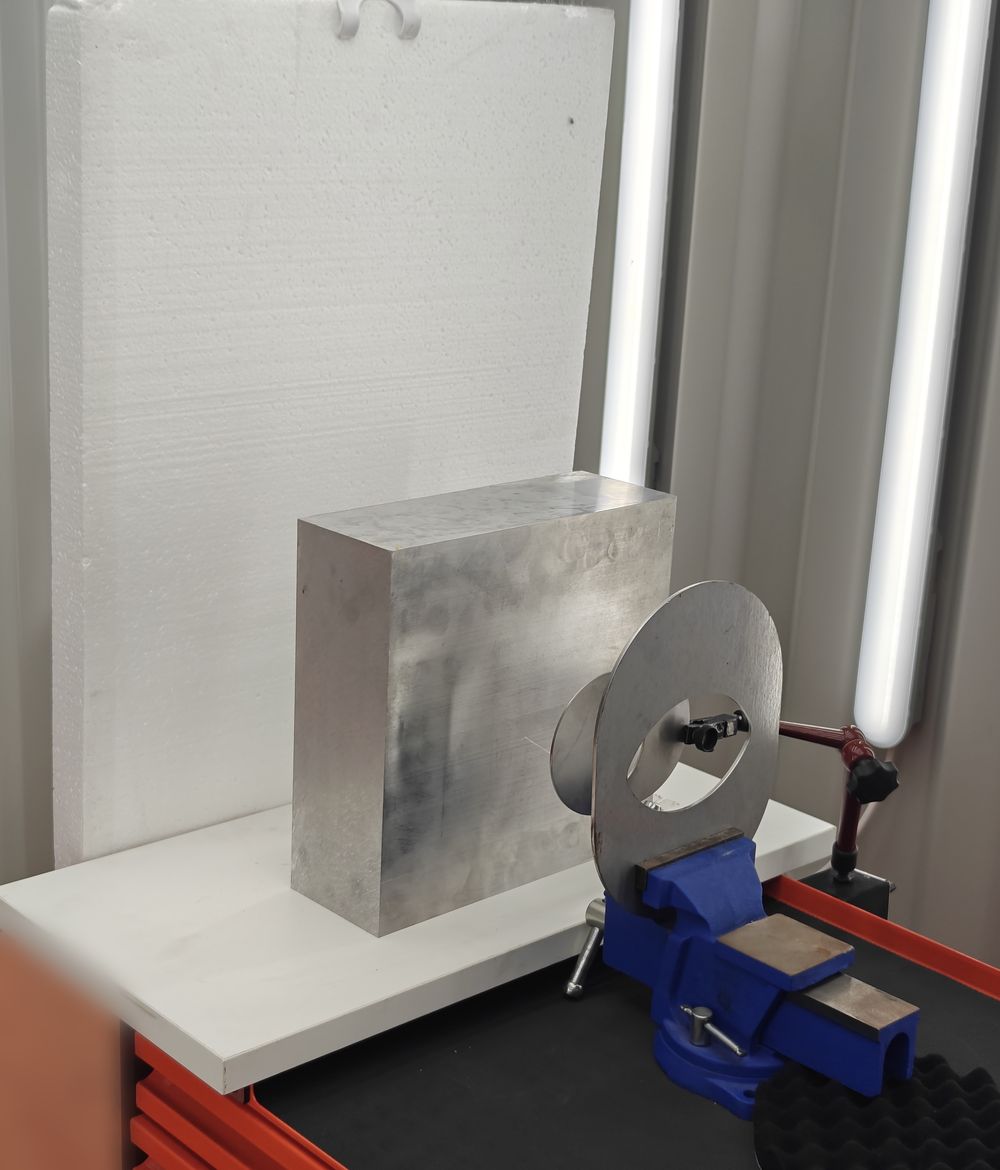
All targets were engaged from 50 m, where the measured energy at target is 120–130 J per projectile group. Target materials match those used in drone construction.
-
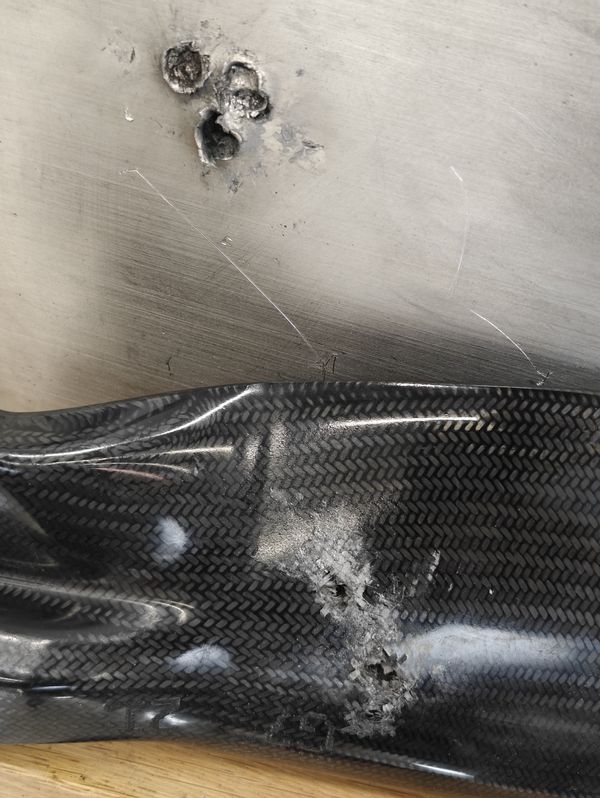
Aluminium block and carbon-fibre propeller after impact, 50 m -
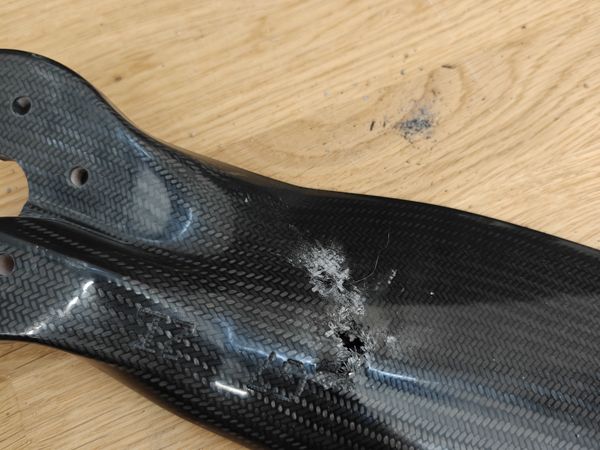
Carbon-fibre propeller after impact, 50 m -
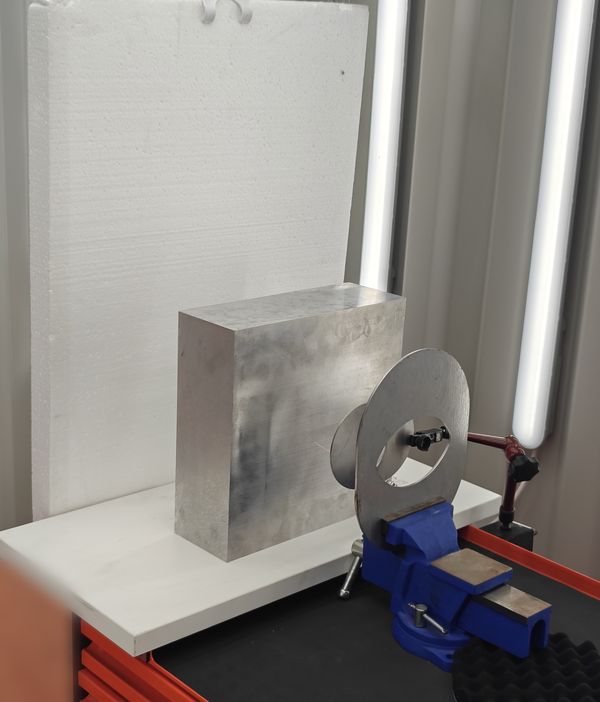
Target stand: aluminium block and steel ring
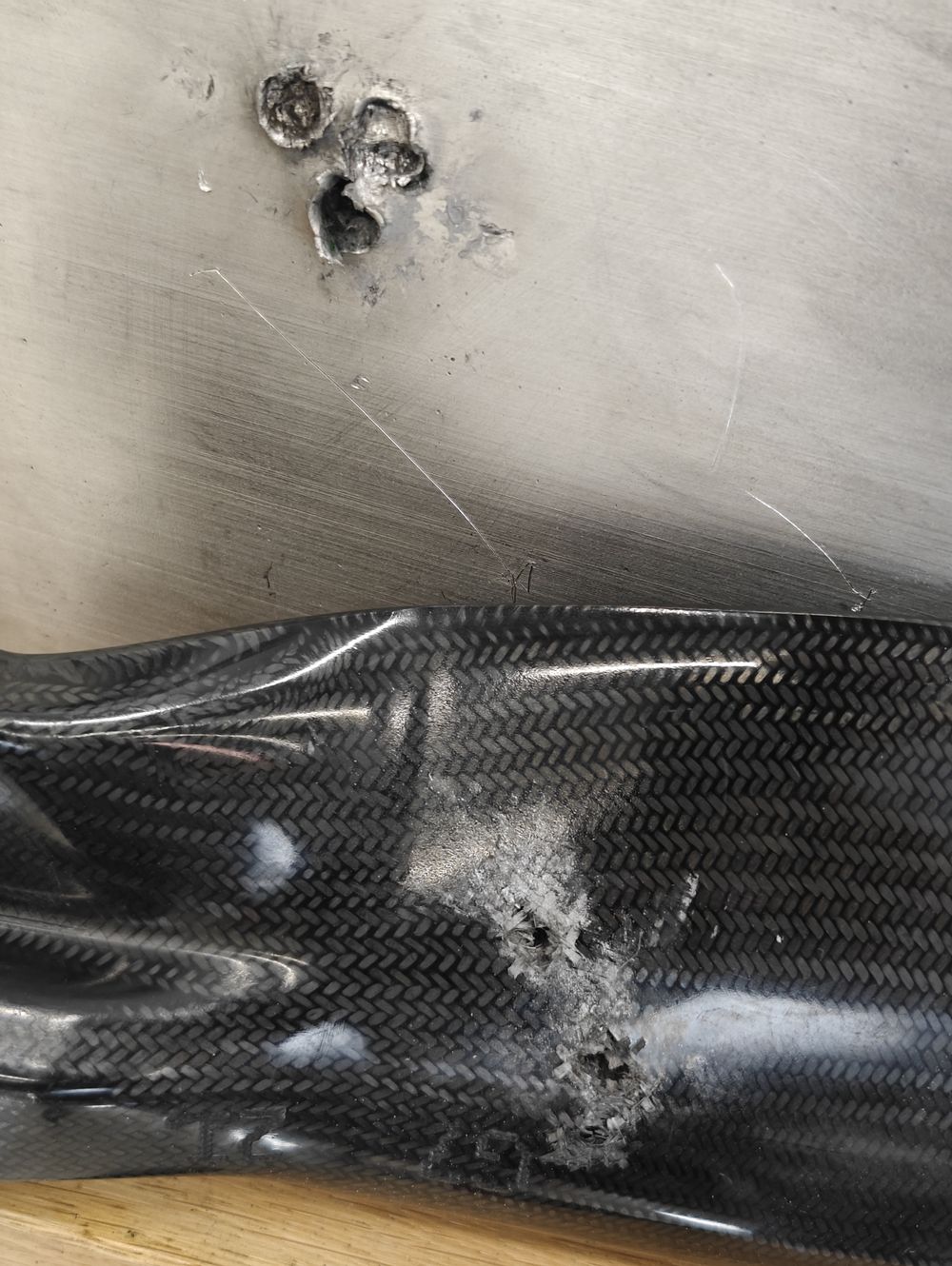
Tested against UAV materials
| Material | Drone component |
|---|---|
| Carbon fibre | Propellers, frames and arms |
| Aluminium | Motor housings and structural parts |
| Steel | Structural parts |
| Plastic | Housings |
| Copper wire coils | Motor windings |
| Magnets | Motor magnets |
All materials engaged in testing at 50 m.
Collateral and regulation
Collateral and regulation
Liquid projectile
Droplets break up on hard surfaces. The projectile has no solid mass that could ricochet or fragment.
Residue
Water-based fluid only. There are no casings, lead or unexploded ordnance to recover.
Safety interlocks
Hardware and software interlocks prevent unintended firing.
Measured Measured energy at target falls from 120–130 J at 50 m to 50 J at 120 m.
Regulatory profile
HyperJet uses no cartridge, combustible propellant, explosive warhead or solid projectile.
HyperJet is not a firearm within the meaning of Directive (EU) 2021/555, which covers projectiles expelled by the action of a combustible propellant.
Logistics
- Reload by refilling the tank.
- The consumable is produced, shipped and stored as a liquid. Concentrated additives allow automated mixing.
- No propellant or explosives to store, transport or account for.
Comparison
Comparison with other counter-UAS methods
| Method | Range class | Collateral profile | Regulatory profile | Fibre-optic and autonomous FPVs | Limit on sustained fire | Consumable |
|---|---|---|---|---|---|---|
| HyperJet | Close: 50–100 m | No ricochet or fragmentation; measured energy at target falls from 120–130 J at 50 m to 50 J at 120 m | No combustible propellant; national authorisation for use against drones | Effective | Fluid tank volume | Water-based fluid, refilled |
| Firearms and anti-drone shotgun shells | Very close to close | Solid shot falls back to the ground; ricochet risk | Firearms legislation | Effective | Magazine capacity and reload | Cartridges with propellant |
| Interceptor drones | Long | Debris from both aircraft | Aviation and defence frameworks | Effective | One interceptor per target | Expended aircraft |
| RF jamming and spoofing | Medium to long | Non-kinetic; interferes with other spectrum users | Spectrum law; generally reserved to authorities | Ineffective | Continuous while powered | Electrical power |
| Net launchers | Very close | Low; captured drone falls | Depends on launch mechanism | Effective | One or a few nets per manual reload | Nets plus gas or pyrotechnic charge |
| Lasers (directed energy) | Medium to long | Low; beam hazard | Military and state use | Effective | Dwell time on each target | Electrical power |
Scroll the table sideways to see all columns.